.png)


Surgical Education Is Not an Event—It’s a Continuum


For years, surgical education has been built around a simple but flawed idea: that learning happens at specific moments in time—a conference, a course, a webinar, a certification. These events have long been treated as milestones in a physician’s development.
But the reality is far more complex. The growth of a surgeon—or any procedural specialist—is not episodic. It is continuous, evolving over time through experience, repetition, reflection, and exposure to new techniques. Learning does not start and stop with an event. It is a process.
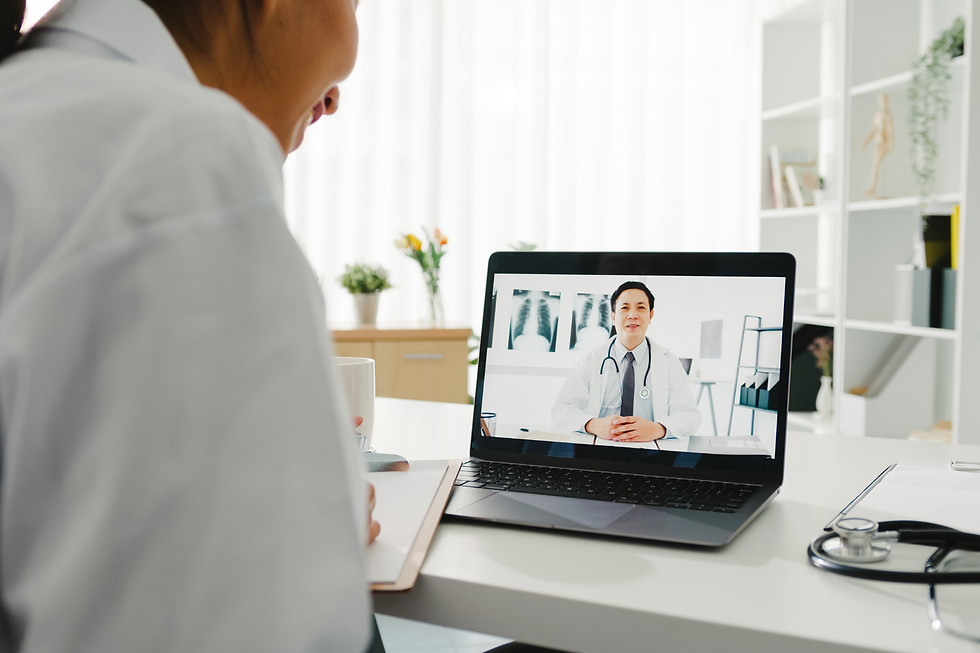
In recent years, the rapid rise of digital education has expanded access in ways we could not have imagined a decade ago. Webinars, virtual symposia, and on-demand platforms have made it easier than ever for physicians to stay informed, regardless of geography or schedule. At the same time, this shift has led many to question the relevance of in-person education, often citing cost, travel, and changing attendance patterns.
This has created a false choice—one that suggests we must decide between digital and in-person learning. In reality, neither approach is sufficient on its own. The future of surgical education does not lie in choosing one format over another, but in understanding how they work together.
Physicians learn in different ways. Some prefer to absorb information through lectures or recorded content, valuing efficiency and flexibility. Others learn through interaction—through discussion, debate, and the exchange of ideas with peers. And for those in procedural specialties, there is an additional layer that cannot be overlooked: the need to learn by doing.
Surgery is not purely intellectual. It is physical. It requires precision, coordination, and a level of tactile understanding that cannot be developed through observation alone. Watching a procedure or discussing technique can build knowledge, but it cannot replace the experience of performing the action itself—feeling tissue, understanding resistance, refining movement, and developing muscle memory.
This is where hands-on training becomes essential. It is not an enhancement to education; it is a core component of it. Without it, the pathway from knowledge to competence remains incomplete.
At the same time, in-person education must evolve. Historically, meetings attempted to serve too many purposes at once—combining lectures, networking, product exposure, and training into a single format. Today, much of the informational content can be delivered more efficiently through digital platforms. This creates an opportunity to redefine the role of in-person experiences.
Rather than replicating what can already be done online, in-person education should focus on what cannot be replicated anywhere else: immersive, hands-on learning environments where physicians can practice, refine, and build confidence under expert guidance. These experiences should be more intentional, more targeted, and designed to deliver depth rather than breadth.
When education is structured as a continuum, each component plays a distinct role. Digital platforms introduce concepts, expand reach, and create awareness. Interactive formats deepen understanding and encourage engagement. Hands-on training builds real capability. And ongoing reinforcement ensures that learning translates into sustained practice change.
This is not a theoretical model—it reflects how physicians actually learn and how behavior truly evolves.
For organizations, institutions, and industry partners, this shift requires a new perspective. Education should no longer be viewed as a series of isolated events, but as an integrated pathway. Success should not be measured by attendance alone, but by progression—by how learners move from awareness to understanding to application.
At AIMIS, this philosophy guides everything we do. We believe in meeting physicians where they are and supporting them as they advance. Some begin with digital education, others through peer engagement, but ultimately, for those in procedural fields, growth depends on hands-on experience. That is where confidence is built, where skills are refined, and where patient outcomes are ultimately improved.
The future of surgical education is not about replacing one format with another. It is about building systems that connect them—creating learning ecosystems that are scalable, practical, and aligned with real-world practice.
Education is not a single moment. It is not a webinar, a meeting, or a course.
It is a continuum.
And those who understand how to design that continuum will shape the future of medicine.
This article is Part 1 of a 3-part series exploring the future of surgical education:
Part 1: The Learning Continuum
Part 2: What kind of Learner are you
Part 3: The Critical Role of Hands-On Training
--------------------------------
About the Author
Christopher A. Guinn is the CEO and Co-Founder of the American Institute for Minimally Invasive Surgery (AIMIS), a healthcare education organization focused on advancing physician training through innovative, multimodal learning platforms.
With decades of experience across medical devices, pharmaceuticals, and physician education, he has led national and international programs designed to accelerate procedural adoption, improve outcomes, and integrate emerging technologies into clinical practice.
He works closely with health systems, industry partners, and key opinion leaders to develop education that reflects how physicians truly learn—combining digital engagement with hands-on, experiential training.


Comments